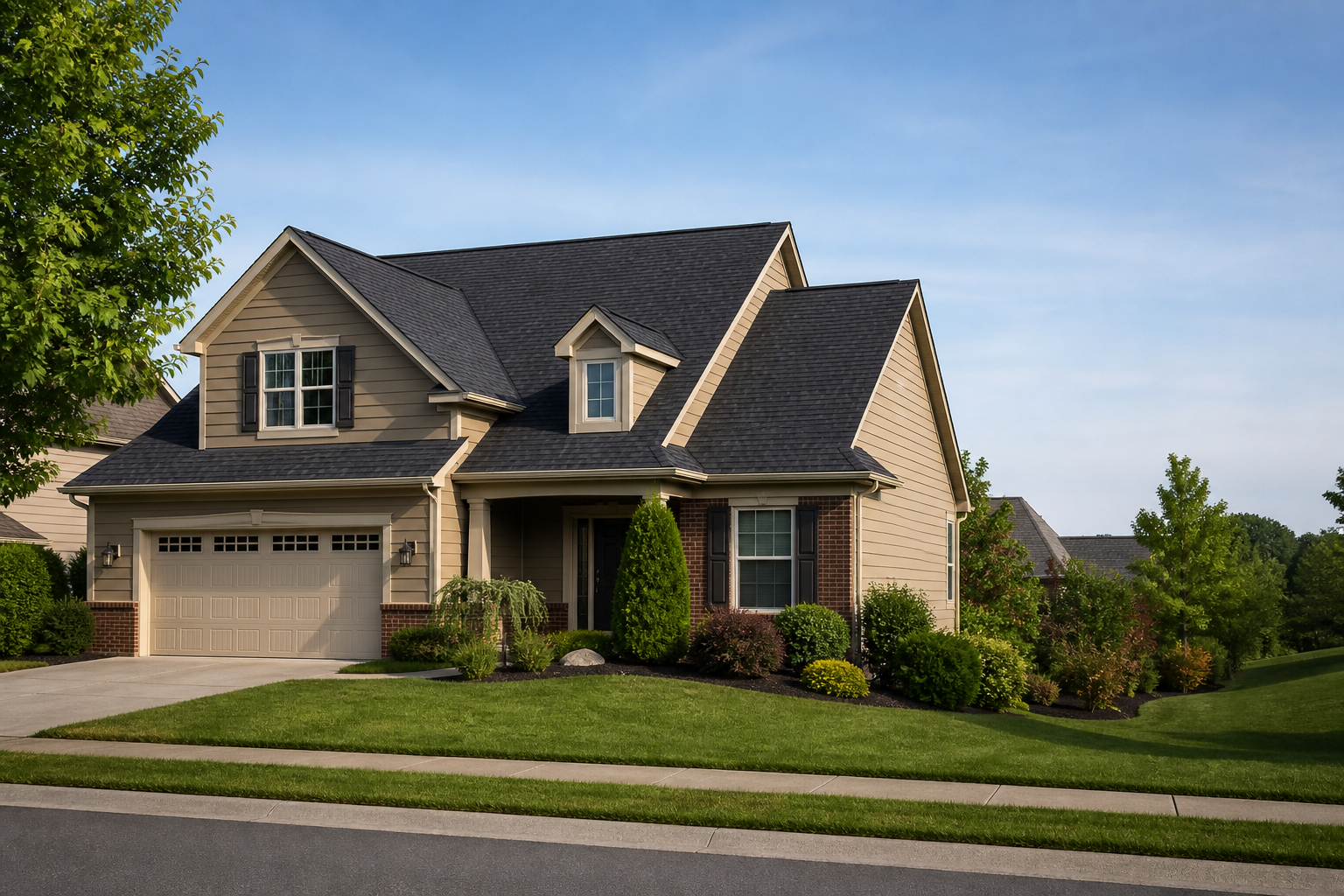
The wind never really stops out here
Drive out past the edge of Minot on US-2 or US-83 and the tree cover drops off fast, which means the wind that was merely noticeable in town is doing real work on a roof by the time you reach open farmland. We see it in how differently the same shingle ages depending on how exposed the lot is, and it is a big part of why we favor a higher wind rating and a tighter nailing pattern the further a job sits from town cover.
Wind is also why a roof job scheduled here has to watch the forecast more closely than a crew working somewhere calmer. A tear-off left open overnight in a stiff prairie gust is a different risk than the same job in a sheltered yard, so we plan sequencing around the wind, not just the calendar.
Housing stock changes block by block and town by town
A lot of the older housing near the middle of Minot, close to Oak Park and along the streets that grew up around Minot State, has the shallow attics and light insulation typical of homes built before energy codes tightened up, and those attics are where most of our winter ice dam calls come from. Head out toward the newer developments near the base and the construction is a different era entirely, with better sealed attics but its own set of issues, mostly around flashing details that got value engineered out during a fast build cycle.
In the smaller towns along the river, the mix leans older still, with farmhouse-style homes that have been re-roofed more than once over the decades, sometimes with a layer or two of old shingle still hiding under what is currently on top. We check for that on every inspection out that way, since a tear-off on a double-layered roof takes longer and turns up more surprises than a single-layer job.
The Souris River sets the calendar as much as the weather does
Snowmelt runoff along the river bottomland every spring means the ground stays soft longer in the low-lying stretches near the water than it does up on higher ground closer to Broadway, and that affects scheduling for anything that needs equipment access, like a full tear-off with a dumpster staged in the yard. We plan spring jobs near the river with that in mind rather than promising a start date that the ground itself will not cooperate with.
The same river valley also channels a fair bit of the humidity that shows up in attics on the homes closest to the water, which is one more reason we spend extra time checking ventilation on jobs out that way instead of treating every attic the same regardless of how close it sits to the water.
A rule of thumb we tell most homeowners
If a house has iced up along the same stretch of eave two winters running, it will do it again the third winter unless something changes in the attic, not just on the roof. We say this a lot because people often ask for a new roof to fix a problem that a new roof alone will not solve, and we would rather tell you that up front than sell a job that leaves the real cause untouched.
One crew covering a wide stretch of ground
Whether the job sits a few blocks from Minot State or out past the edge of one of the smaller towns along the river, the same crew handles the inspection, writes the scope, and comes back to do the work. We built it that way on purpose, since a big territory only works if the person who saw the roof in person is the one making the call on how to fix it.